

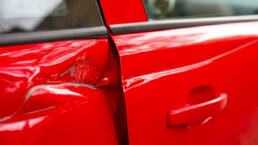
A small dent can appear out of nowhere. A runaway shopping cart, a door opened too quickly in a tight parking spot, or a stray baseball can leave a ding that bothers you every time you walk up to your car. Many drivers wonder whether they can fix a small dent at home or whether it needs a trip to the shop. The answer depends on the dent’s size, location, and whether the paint is still intact. In this guide, our team at Premium Automotive walks through how to assess a dent, the DIY dent repair methods that can work on minor damage, the mistakes that make dents worse, and the clear signs that it is time to call a professional in Aurora, Littleton, or anywhere across the Denver metro.
Assess the Dent Before You Try to Fix It
Not every dent is a good candidate for a home repair. Taking a few minutes to evaluate the damage will help you choose the right method, or tell you to skip DIY altogether.
- Size and depth: Shallow, rounded dents about the size of a coin to a softball are the most likely to respond to DIY methods. Deep dents that stretch the metal rarely pop back cleanly.
- Shape: Smooth, round dents are far easier to fix than sharp creases. A crease means the metal has folded, and it will not return to shape with suction or heat alone.
- Location: Dents in the middle of a flat panel like a door or hood are easier to work on than dents along body lines, panel edges, or near seams where the metal is stiffer.
- Paint condition: Look closely for cracks, chips, or flaking around the dent. If the paint is damaged, pulling the dent can cause more flaking, and the area will need refinishing regardless.
- Panel material: Most bumpers are plastic, while doors, fenders, and hoods are usually steel or aluminum. Plastic responds well to heat, while aluminum is harder to reshape than steel and is easy to overwork.
If your dent is small, shallow, round, and the paint looks perfect, you may be able to improve it at home. If it fails several of these checks, a professional evaluation will save you time and protect your finish.
Before trying any repair, wash and dry the area thoroughly and inspect it in bright, indirect light. Viewing the panel from a low angle, or watching how a straight reflection bends across it, makes it much easier to see the full outline of the dent. What looks like one small ding sometimes turns out to be a wider, shallow depression with a sharper point at its center.
DIY Dent Repair Methods for Small Dings
There are several popular approaches to car dent removal at home. Each works best on a specific type of dent, and none of them are a cure-all, so match the method to the damage and go slowly.
Suction cup dent pullers are the simplest option. They work best on larger, shallow dents in flat areas such as a door or rear quarter. After cleaning the surface, press the cup firmly over the center of the dent and pull steadily. Some dents pop out in one motion, while others improve gradually over several pulls. Small or sharp dings are usually too small for a suction cup to grip effectively.
Glue pulling kits give you more control on smaller dents. They use hot glue to attach plastic tabs to the center of the dent, then a slide hammer or bridge puller lifts the metal. Once the glue is released with isopropyl alcohol, you inspect the result and repeat as needed. This technique is similar to what technicians use in professional work, but it takes practice to avoid pulling the metal too high.
Hot water works surprisingly well on plastic bumper covers. Pouring hot water over the dented area softens the plastic, and you can often push the dent out from behind by hand. Always wear gloves and let the bumper cool to set its shape. If the bumper cover is cracked, torn, or pulled loose from its mounting clips, heat will not fix it, and our body repair technicians can repair or replace the cover and refinish it to match.
Some drivers try heating a dent with a hair dryer and then quickly cooling it with compressed air. Results with this method are inconsistent, and it rarely works on steel panels, so treat it as a last resort rather than a reliable fix.
Common Mistakes That Make Small Dents Worse
- Using too much force: Pulling too hard creates a high spot, where the metal is raised above the panel surface. High spots are often harder to correct than the original dent.
- Hammering from the outside: Tapping on the face of a dent stretches the metal and can crack the paint, turning a simple ding into a panel that needs traditional repair.
- Overheating the panel: Heat guns and torches can blister paint, damage clear coat, and warp plastic. Keep heat gentle and moving at all times.
- Prying from behind without access: Forcing tools through gaps or removing trim without knowing the panel layout can damage wiring, clips, and interior parts.
- Ignoring the paint: Once the paint cracks, moisture can reach bare metal, which leads to rust, especially during Colorado winters.
The biggest mistake of all is not knowing when to stop. A DIY repair that improves the dent by 80 percent is often a better outcome than one pushed too far. It also helps to work in a mild, shaded spot, since cold panels are more likely to crack paint and hot panels make glue tabs release early. If the dent is not improving after a few careful attempts, set the tools down. Many dents that are made worse at home could have been repaired easily and affordably with paintless dent repair if they had been left alone.
When to Call a Pro for Small Dent Repair
Some dents are simply better left to professionals, both for the quality of the result and to protect your vehicle’s factory finish. If any of the following describe your dent, it is time to call a pro.
A sharp crease or deep dent needs professional tools and technique. Creases require the metal to be worked slowly from behind, often from multiple angles, and suction cups or glue tabs will not correct them. Dents on body lines or panel edges fall into the same category because the metal there is reinforced and holds its shape stubbornly.
Multiple dents across the vehicle, especially after a hailstorm, are also a job for a professional. Hail can leave dozens or even hundreds of small dents across the roof, hood, and trunk. Working through them one by one at home is not practical, and insurance often covers hail repairs. Our hail damage repair services are built to handle widespread damage efficiently, and our Colorado hail season guide explains what to do after a storm.
Damaged paint changes the repair entirely. When a dent comes with cracked or chipped paint, the panel needs traditional body work, filler if necessary, and refinishing. Our auto body repair team handles this type of damage and color matches the finish to the rest of the vehicle.
Finally, if the dent sits near sensors, cameras, or electronics, or if you drive a newer vehicle with aluminum panels, professional repair protects both the panel and the technology built into it.
Why Paintless Dent Repair Is Often the Best Pro Option in Colorado
For small dents with intact paint, paintless dent repair is usually the most effective professional solution. Instead of sanding, filling, and repainting, trained technicians use specialized tools to gently massage the metal back into place from behind the panel. Because the factory paint is never disturbed, the vehicle keeps its original finish, which helps protect its appearance and resale value.
Paintless dent repair is especially popular here because Colorado sees frequent hail from spring through late summer. Hail dents are typically round and shallow, which makes them ideal for this technique when the paint has not cracked. Door dings from busy parking lots and minor impacts from loose debris are also common candidates. Repairs are often completed faster than traditional body work, and because there is no painting involved, the cost is usually lower as well.
That said, paintless dent repair is not the right fit for every dent. Size, depth, location, and panel access all affect whether it will work. Our post on when paintless dent removal works best goes deeper into the types of dents that qualify, and our article on signs your car could use paintless dent repair can help you spot good candidates on your own vehicle.
Drivers in the south metro can bring their vehicle to our Littleton paintless dent repair team, while east metro drivers can visit our Aurora auto body shop for a quick, no-pressure assessment of whether the dent can be fixed without paint.
Recap: Should You Fix That Small Dent Yourself?
Here is a quick way to decide your next step:
- Small, shallow, round dent with perfect paint on a flat panel: a suction cup or glue pulling kit may help.
- Dent in a plastic bumper cover: hot water and gentle pressure from behind often work well.
- Sharp crease, deep dent, or dent on a body line or edge: call a professional.
- Cracked, chipped, or flaking paint: professional body repair and refinishing are needed.
- Multiple dents from hail: schedule a professional inspection and check your insurance coverage.
- No improvement after a few careful attempts: stop and have it assessed before the damage gets worse.
Handling small dents early, and choosing the right method from the start, is the best way to protect your vehicle’s finish and keep repair costs low.
Request an Appointment for Professional Dent Repair
If a dent is too deep, too sharp, or too widespread to fix at home, our team at Premium Automotive is ready to help. We will inspect the damage, let you know whether paintless dent repair or traditional body work is the right fit, and give you a free estimate before any work begins. Our goal is to restore your vehicle’s appearance while preserving as much of the original finish as possible. Request an Appointment at our Aurora shop, or use our Littleton service request form to schedule a visit closer to home.

We will repair your vehicle with competence and consideration! Let us get the job done right for you the first time and take the stress out of auto body repairs!
Like this article? Spread the word!
Related Posts

November 4, 2026
Fender vs. Bumper: What’s the Difference (and Why It Matters for Repairs)
Fender vs. bumper: learn the difference and why it matters for collision repairs in…

July 12, 2026
5 Signs Your Littleton Car Could Use Paintless Dent Repair
Hail dents or dings on your car? Discover 5 signs you need paintless dent repair in…

October 2, 2025
Flawless Fixes with Premium Automotive’s Paintless Dent Repair in Aurora, CO
Flawless Paintless Dent Repair in Aurora, CO by Premium Automotive. Restore your…